The Story
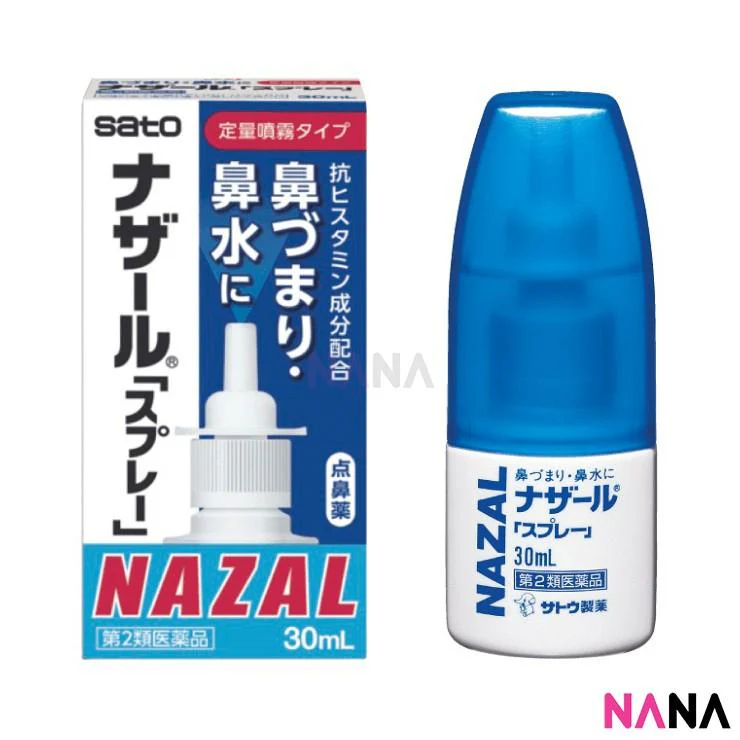
Sato Nazal Spray Pump is a Japanese over-the-counter nasal decongestant containing naphazoline hydrochloride 0.05% with chlorpheniramine maleate, formulated to relieve nasal congestion from colds, rhinitis and sinus pressure. The 30ml pump bottle is Japan's most-recognised drugstore nasal spray and has been sold under the Sato Pharmaceutical brand for decades.
At a glance
- Best for: short-term relief of blocked nose from colds, allergies or sinusitis
- Active ingredients: naphazoline hydrochloride 0.05% (decongestant), chlorpheniramine maleate (antihistamine), benzalkonium chloride (preservative)
- Format: 30ml metered pump spray
- Origin: Sato Pharmaceutical Co., Ltd., Japan — imported direct
- Best paired with: a saline rinse and rest; explore the rest of our Japanese medicine cabinet
Why we stock Sato Nazal Spray
This is the spray Japanese travellers ask us for by name. Hong Kong customers discover it on trips to Japan and want to keep a bottle at home for cold season. We stock it because the formula combines a decongestant with an antihistamine in one bottle — useful for the common "stuffy and runny at the same time" cold pattern — and because Japanese OTC quality control gives us a product we trust. We import every bottle direct from Japan with Japanese-language packaging intact, so you can verify the lot number on Sato's site if you wish.
How to use
- Prime the pump on first use by spraying 3–4 times into the air until a fine mist is produced.
- Tilt your head slightly forward, insert the nozzle gently into one nostril, close the other nostril with a finger, and press the pump once while breathing in slowly through the nose. Repeat for the other side.
- Dosage: adults and children over 7 can use 1–2 sprays per nostril, up to 6 times per day. Wait at least 3 hours between doses.
- Wipe the nozzle with a clean tissue after use and recap.
Important: Decongestant sprays like this should not be used for more than 7 consecutive days. Prolonged use causes rebound congestion (rhinitis medicamentosa) — the nose becomes stuffier when you stop. If symptoms last beyond a week, see a doctor.
Full ingredient list
- Active: naphazoline hydrochloride 0.05%, chlorpheniramine maleate 0.5%
- Preservative: benzalkonium chloride
- Other: purified water, sodium chloride, pH adjusters
Sato Nazal Spray vs saline-only sprays
A plain saline spray (like Otsuka's seawater rinse) is safe for daily, long-term use and works by physically rinsing irritants from the nasal lining. Sato Nazal Spray is medicated — it works faster (within 5–10 minutes) by shrinking blood vessels, but is intended for short bursts only. A sensible pattern: use Sato during the worst 2–3 days of a cold, then switch to saline for the recovery phase. Browse our wider Japanese pharmacy range for both options.
FAQ
Is this authentic Sato from Japan? Yes. We import direct from Japanese wholesalers — the packaging is in Japanese with the standard PMDA registration markings. Each bottle ships with batch and expiry stamped on the base.
Can I use it during pregnancy? Pregnant and breastfeeding women should consult a doctor before using any decongestant nasal spray. Saline alternatives are usually preferred.
Can children use it? The Japanese label permits children aged 7 and above at the same dose. Not for use under 7.
Why is my nose worse after I stop? If you've used the spray for more than a week, you may experience rebound congestion. The fix is to taper off — reduce to one nostril for a few days, then stop. The nasal lining usually recovers within 1–2 weeks.
How long does one 30ml bottle last? Used at maximum dose (6 times daily, 2 sprays each), about 10 days. Used occasionally during a cold, one bottle typically lasts 2–3 cold seasons.
Manufacturer information
Manufactured and distributed by Sato Pharmaceutical Co., Ltd., Tokyo, Japan. Sold under Japan's "Designated Class 2" OTC medicine category. This product is not intended to diagnose, treat or cure any disease. Always read the label. If symptoms persist or worsen, stop use and consult a healthcare professional.
Description
Sato Nazal Spray Pump is a Japanese over-the-counter nasal decongestant containing naphazoline hydrochloride 0.05% with chlorpheniramine maleate, formulated to relieve nasal congestion from colds, rhinitis and sinus pressure. The 30ml pump bottle is Japan's most-recognised drugstore nasal spray and has been sold under the Sato Pharmaceutical brand for decades.
At a glance
- Best for: short-term relief of blocked nose from colds, allergies or sinusitis
- Active ingredients: naphazoline hydrochloride 0.05% (decongestant), chlorpheniramine maleate (antihistamine), benzalkonium chloride (preservative)
- Format: 30ml metered pump spray
- Origin: Sato Pharmaceutical Co., Ltd., Japan — imported direct
- Best paired with: a saline rinse and rest; explore the rest of our Japanese medicine cabinet
Why we stock Sato Nazal Spray
This is the spray Japanese travellers ask us for by name. Hong Kong customers discover it on trips to Japan and want to keep a bottle at home for cold season. We stock it because the formula combines a decongestant with an antihistamine in one bottle — useful for the common "stuffy and runny at the same time" cold pattern — and because Japanese OTC quality control gives us a product we trust. We import every bottle direct from Japan with Japanese-language packaging intact, so you can verify the lot number on Sato's site if you wish.
How to use
- Prime the pump on first use by spraying 3–4 times into the air until a fine mist is produced.
- Tilt your head slightly forward, insert the nozzle gently into one nostril, close the other nostril with a finger, and press the pump once while breathing in slowly through the nose. Repeat for the other side.
- Dosage: adults and children over 7 can use 1–2 sprays per nostril, up to 6 times per day. Wait at least 3 hours between doses.
- Wipe the nozzle with a clean tissue after use and recap.
Important: Decongestant sprays like this should not be used for more than 7 consecutive days. Prolonged use causes rebound congestion (rhinitis medicamentosa) — the nose becomes stuffier when you stop. If symptoms last beyond a week, see a doctor.
Full ingredient list
- Active: naphazoline hydrochloride 0.05%, chlorpheniramine maleate 0.5%
- Preservative: benzalkonium chloride
- Other: purified water, sodium chloride, pH adjusters
Sato Nazal Spray vs saline-only sprays
A plain saline spray (like Otsuka's seawater rinse) is safe for daily, long-term use and works by physically rinsing irritants from the nasal lining. Sato Nazal Spray is medicated — it works faster (within 5–10 minutes) by shrinking blood vessels, but is intended for short bursts only. A sensible pattern: use Sato during the worst 2–3 days of a cold, then switch to saline for the recovery phase. Browse our wider Japanese pharmacy range for both options.
FAQ
Is this authentic Sato from Japan? Yes. We import direct from Japanese wholesalers — the packaging is in Japanese with the standard PMDA registration markings. Each bottle ships with batch and expiry stamped on the base.
Can I use it during pregnancy? Pregnant and breastfeeding women should consult a doctor before using any decongestant nasal spray. Saline alternatives are usually preferred.
Can children use it? The Japanese label permits children aged 7 and above at the same dose. Not for use under 7.
Why is my nose worse after I stop? If you've used the spray for more than a week, you may experience rebound congestion. The fix is to taper off — reduce to one nostril for a few days, then stop. The nasal lining usually recovers within 1–2 weeks.
How long does one 30ml bottle last? Used at maximum dose (6 times daily, 2 sprays each), about 10 days. Used occasionally during a cold, one bottle typically lasts 2–3 cold seasons.
Manufacturer information
Manufactured and distributed by Sato Pharmaceutical Co., Ltd., Tokyo, Japan. Sold under Japan's "Designated Class 2" OTC medicine category. This product is not intended to diagnose, treat or cure any disease. Always read the label. If symptoms persist or worsen, stop use and consult a healthcare professional.